
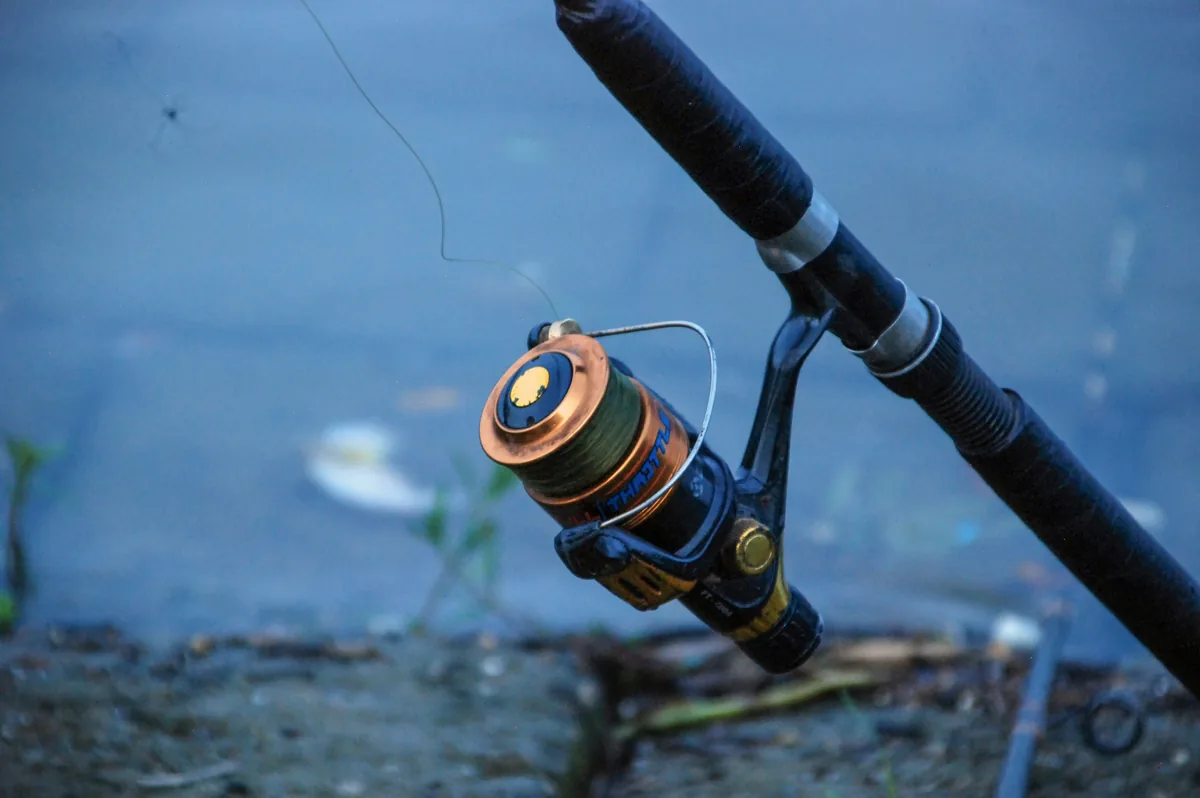
A beginner does not need five rods. One 7-foot medium-heavy rod with a fast action, matched to the right reel and line, will fish a Texas rig, a jig, a spinnerbait, and a crankbait well enough to learn all four. This guide explains that one rod, the reel and line that go with it, and the mistakes that waste a beginner’s money.
The one rod: 7-foot, medium-heavy, fast action
The best first bass rod is 7 feet long, medium-heavy power, fast action. Each of those three specs does a job. Seven feet gives you casting distance and leverage for hooksets without being unwieldy from the bank or in a kayak. Medium-heavy power is strong enough to pull a bass out of cover and to cast lures from 1/4 to 3/4 oz, but not so stiff that it cannot cast a lighter bait. Fast action means the rod bends mostly in the top third, which gives you sensitivity — you feel the bottom, the bite, and the difference between a rock and a fish — and a quick, powerful hookset.
A medium power rod is the alternative if you plan to fish mostly light lures and finesse techniques, like a Ned rig or a drop shot. But for a first rod that has to do everything, medium-heavy is the better call: it handles the heavy cover work that a medium rod cannot, and it still casts a 1/4 oz lure well enough to learn on.
Baitcasting or spinning: which reel for a beginner
A baitcasting reel is the standard for bass fishing, and it is the right choice for this rod. It gives you casting accuracy, line control, and the power to winch a fish out of cover. The learning curve is real — a baitcaster will backlash if you thumb the spool wrong — but it is a skill you learn in an afternoon, not a month, and it pays off on every trip after that.
If you have never used a baitcaster and want the easiest first month, a spinning reel is the honest alternative. It is more forgiving to cast, it tangles less, and it handles light line and light lures better. A 2500- or 3000-size spinning reel on a 7-foot medium spinning rod is the most forgiving bass setup you can buy, and it will catch just as many fish while you learn. The trade-off is power and accuracy: a spinning setup will not pull a bass out of thick grass as well as a baitcaster, and it is harder to place a cast precisely under a dock.
The practical answer: if you are willing to spend one afternoon learning to thumb a baitcaster, buy the baitcaster. If you want to fish on day one with zero learning curve, buy the spinning setup and add a baitcaster later. Either one catches bass; the baitcaster just catches them in more places.
The reel and line that match
For a baitcasting setup, pair the rod with a low-profile baitcasting reel in a 6.5:1 or 7.1:1 gear ratio. That ratio is fast enough to pick up line quickly on a hookset and to burn a spinnerbait, but not so fast that it ruins a slow crankbait retrieve. Spool it with 12 to 15 lb fluorocarbon as the all-around line — fluorocarbon is nearly invisible underwater, sinks, and has low stretch, so you feel the bite and the bottom clearly.
For a spinning setup, pair the rod with a 2500- or 3000-size spinning reel and spool it with 10 to 12 lb monofilament or fluorocarbon. Monofilament is the more forgiving choice for a beginner: it is cheap, it stretches (which cushions hard hooksets), and it is easy to tie knots with. Fluorocarbon is the better fishing line once you are comfortable, because it is nearly invisible and more sensitive.
Do not over-line the rod. Twenty-pound mono on a medium spinning rod is stiff, hard to cast, and unnecessary for most bass fishing. Match the line to the rod’s rating — the rod blank usually prints a line rating, and staying inside it keeps the rod casting the way it was designed to cast.
What to spend and what to skip
A good beginner bass rod costs $60 to $120. In that range you get a rod with a sensitive blank, decent guides, and a reel seat that will last years. Below $40, the blank is usually heavy and numb — you will not feel the bottom or the bite, and you will miss fish you should have caught. Above $150, you are paying for weight savings and sensitivity that a beginner cannot yet use; save that money for lures and line.
A rod and reel combo is the simplest buy. Most major brands sell a matched baitcasting or spinning combo for $80 to $130, and the rod and reel are already balanced for each other. It is the fastest way to get on the water with a setup that works. The one thing to check is that the combo is actually a bass combo — a 7-foot medium-heavy baitcasting combo or a 7-foot medium spinning combo — and not a generic fishing combo with a rod that is too light or too long for bass work.
Skip the second rod until you have fished the first one for a season. The most common beginner waste is buying three rods before learning one. Fish the first rod, learn which techniques you actually use, and then buy a second rod that fills the gap — usually a lighter spinning rod for finesse, or a heavier rod for frogs and flipping.
How the rod changes with the technique
The 7-foot medium-heavy fast rod is a compromise, and knowing where it compromises helps you fish it well. For a Texas rig and a jig, it is exactly right: the fast action gives you sensitivity and a strong hookset, and the medium-heavy power pulls fish out of cover. For a spinnerbait and a chatterbait, it is also right — the power handles the retrieve and the hookset.
For a crankbait, it is slightly too stiff. A crankbait rod is usually a moderate-action rod, because the softer action lets the fish take the bait deeper and keeps a treble-hooked fish from throwing the lure during the fight. You can still fish a crankbait on a fast-action rod — just use a slightly softer hookset and keep the rod tip down during the fight, and you will land most of the fish.
For finesse techniques like a drop shot or a Ned rig, it is too heavy. A light bait on a medium-heavy rod does not cast well and does not transmit the subtle bite. That is the gap your second rod will fill, when you are ready for it — a 7-foot medium-light or medium spinning rod with 6 to 10 lb fluorocarbon.
The second and third rods, when you are ready
When you have fished a season and know which techniques you use most, the second rod is usually a spinning rod for finesse: a 7-foot medium spinning rod with 8 to 10 lb fluorocarbon, for a drop shot, a Ned rig, and a weightless stick bait. It covers everything the first rod does poorly.
The third rod is usually a heavy rod for frogs and flipping: a 7-foot heavy baitcasting rod with 40 to 65 lb braid, for fishing matted vegetation and heavy cover. It is a specialist, and you do not need it until you are fishing the thick stuff regularly.
Three rods — a medium-heavy baitcaster, a medium spinning rod, and a heavy baitcaster — cover every bass technique a beginner will meet. You do not need more than that to catch bass consistently.
The mistakes that waste a beginner’s money
The most expensive mistake is buying a rod that is too light. A light or ultralight rod cannot cast a 3/8 oz lure, cannot set a hook through a plastic worm, and cannot pull a bass out of a brush pile. It is a panfish rod, not a bass rod, and it will cost you fish on every trip.
The second mistake is buying the cheapest rod on the shelf. A $25 rod is heavy, numb, and will break at the worst moment. Spend $60 to $120 on the first rod and it will last years and actually help you feel the bite.
The third mistake is buying five rods before learning one. A rod you do not understand is a rod you cannot fish well. Learn the first rod, find out which techniques you actually use, and then buy the next rod for a specific gap — not because the tackle shop had a sale.